
REVIEW · LUXOR
4Nights Nile Cruise from Luxor to Aswan with Abu Simbel & Balloon
Ancient temples, one river, five busy days. This journey combines a four-night Nile cruise with major sights in Upper Egypt, including the Valley of the Kings, Karnak, Edfu, Kom Ombo, Philae, and Abu Simbel. I especially like the sunrise balloon ride over Luxor and the fact that transfers, meals, guiding, and the Abu Simbel trip are bundled into one package. The main concern is operator reliability, since public feedback ranges from enthusiastic praise to serious complaints about communication and business practices.
You should also know that the pace is full. Early starts, long road transfers, temple visits, and cruise schedules leave little spare time. The advertised tour is private for your group, but the operator has also referred to shared group arrangements, so I would confirm that point, along with the ship name, cabin standard, guide arrangements, and every included activity, before paying.
Five details that shape this Nile journey
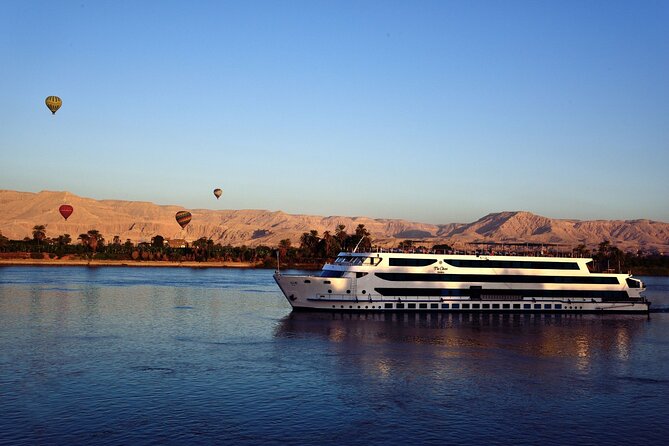
- Sunrise balloon ride over Luxor: A short flight gives you a quiet aerial view before the day’s temple visits begin.
- Four nights on a five-star Nile ship: Accommodation, breakfast, lunch, and dinner are included, with a swimming pool available during free time.
- Abu Simbel included: The long day trip reaches Egypt’s most dramatic temple complex and returns to the ship around lunchtime.
- Motorboats and traditional transport: The schedule uses a motorboat to reach Luxor’s west bank, another to Philae, and a horse-drawn carriage at Edfu.
- A temple-heavy route: You visit the Valley of the Kings, Hatshepsut, Karnak, Luxor Temple, Edfu, Kom Ombo, Philae, the High Dam, and the Unfinished Obelisk.
- Mixed operator record: Strong praise for the sights, ship, food, and balloon ride is balanced by complaints about confirmations, transparency, and review authenticity.
What the $1,391 price really covers
At $1,391 per person, this is not a budget Nile sailing. Yet the price includes four nights aboard a five-star cruise ship, all listed meals, an air-conditioned vehicle, an Egyptologist guide, service charges and taxes, the Abu Simbel excursion, and the Luxor balloon flight.
That bundle can be useful. You are not arranging separate transport to the west bank, a balloon company, a boat to Philae, a ride to Abu Simbel, or a guide for each major monument. Entrance tickets are included for the main archaeological stops as well.
The value depends heavily on what you receive on the ship and how clearly the company handles the arrangements. A five-star label can mean different things in Egypt, and the public feedback includes one particularly practical warning: the boat was comfortable and the cabin was pleasant, but it did not look like the promotional video. That is a reason to request the ship’s actual name and recent cabin photographs.
Meals are included as breakfast, lunch, and dinner for four days. Drinks are not clearly included in the package, and the operator has stated that full board does not include drinks, including alcoholic drinks. Tipping is also excluded, so allow room in your budget for that extra cost.
More Nile Cruise and Balloon Packages in Luxor:
- From Luxor: 3-Night Nile Cruise to Aswan and Hot Air Balloon
★ 3.7 · 297 reviews - From Luxor: 5-Day Nile Cruise to Aswan with Balloon Ride
★ 4.2 · 168 reviews - Private Tour to Luxor West and East Banks with Hot Air Balloon,Felucca and lunch
★ 5.0 · 162 reviews
Day one: royal tombs on Luxor’s west bank
The first morning begins with an Egyptology guide and a motorboat crossing to Luxor’s west bank. This is a pleasant way to reach the monuments, since the Nile crossing gives you a short break from road traffic before the main visits begin.
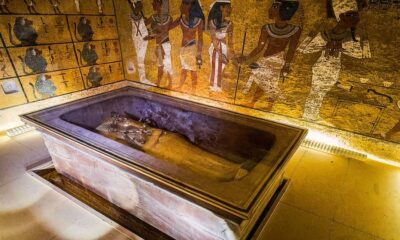
The Valley of the Kings receives about three hours. This is the right amount of time for a guided visit, though you will not see every tomb. The valley holds many royal burial places, and the route normally focuses on a selection of open tombs. The tomb of Tutankhamun is the famous name, but its small scale can surprise you after the grand publicity surrounding the young king.
Your ticket for the tomb of Tutankhamun may involve an extra charge in some Egyptian ticket systems, so ask the guide before the visit if it is included in your package. The supplied tour details name the Valley of the Kings as included, but do not specify every individual tomb ticket.
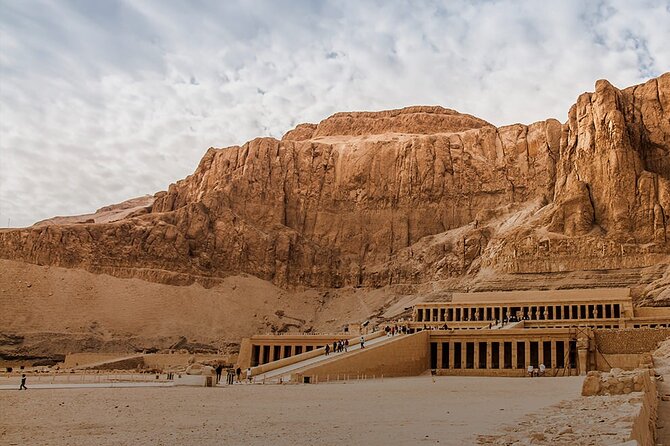
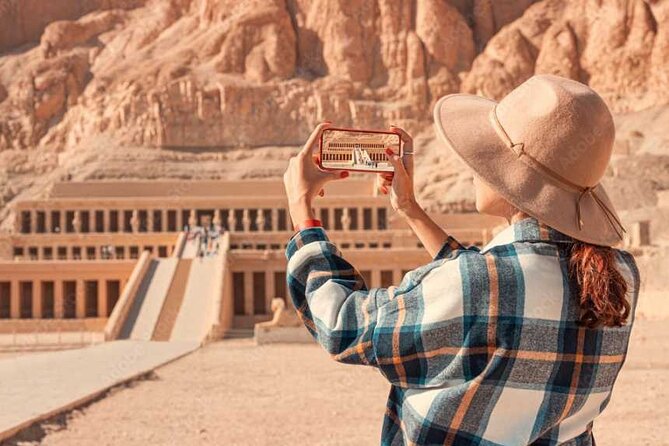
Next comes the Temple of Hatshepsut at Deir el Bahari, with about two hours. The temple’s broad terraces and cliff setting make it very different from the enclosed tombs. Your guide should explain Hatshepsut’s unusual position as Egypt’s female pharaoh, along with the political story behind her reign and the damage later done to her images.
The last stop is the Colossi of Memnon, two huge seated statues of Amenhotep III. Thirty minutes is enough for photographs and a short explanation. This is a quick stop, not a full museum visit, so treat it as a useful final look before returning toward the ship.
This first day is strong on ancient Egypt, but it is not gentle. Three major sites in one morning and afternoon can leave you tired, particularly in hot weather. Bring water, sun protection, and shoes that can handle uneven ground.
Day two: a balloon flight, Karnak, and the start of sailing
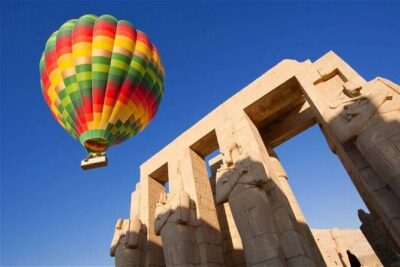
The hot air balloon ride takes place early, before the main temple visits. The flight itself is listed as about 45 minutes, though the full outing will likely take longer because of the early pickup and launch arrangements. The advantage is the view: from above, Luxor’s temples, fields, river, and desert edge form a single picture that is difficult to grasp from ground level.
The balloon is one of the most distinctive parts of the package, but it is also weather-dependent. The available information does not state how cancellations or replacement arrangements are handled, so ask the operator what happens if wind or other conditions prevent the flight.
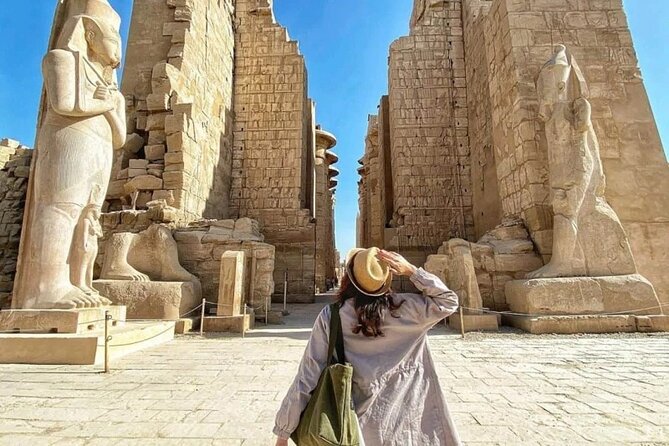
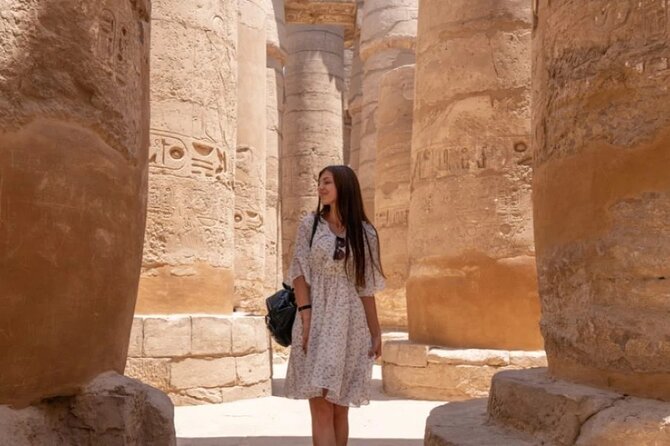
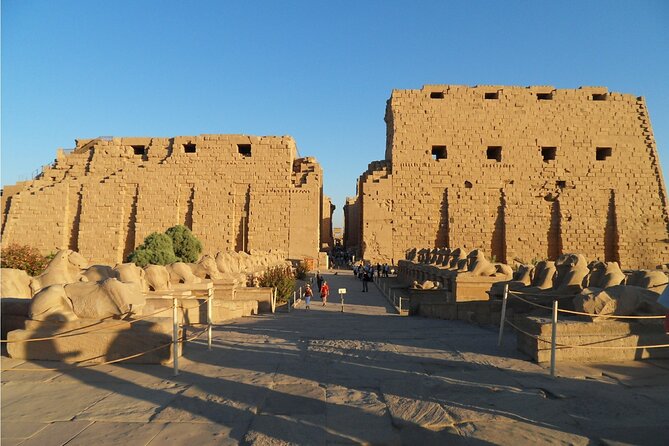
After landing, the schedule turns to the east bank. Karnak Temple receives about two hours. Its scale is the point. You move through a vast complex of pylons, courtyards, columns, and sacred spaces built over many generations. The Great Hypostyle Hall, with its forest of massive columns, is the visual high point for many people.
A two-hour visit gives you a solid introduction, but it is not enough for every corner. Listen closely to the guide’s route, since the complex can feel confusing without a clear plan. Comfortable shoes matter here, and so does keeping your group in sight.
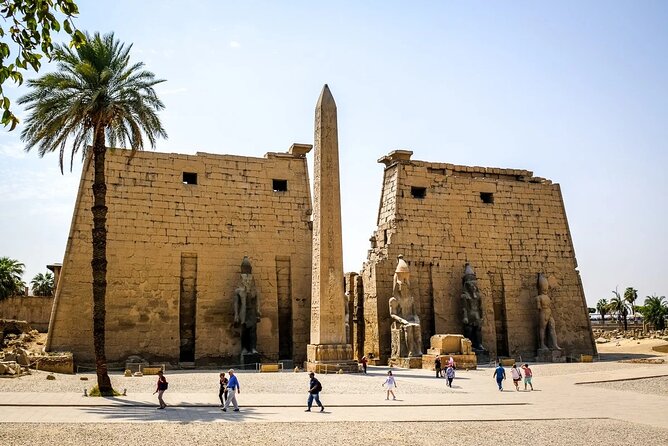
The day ends at Luxor Temple, where you have about ninety minutes. This temple feels more compact and more direct than Karnak. Its columns, processional avenue, and connections with ancient royal ceremony make it an excellent second stop, especially after seeing Karnak earlier in the day.
In the afternoon, you board the ship and begin sailing south. The vessel passes through the Esna lock and continues toward Edfu. The schedule lists roughly eight hours for this portion, which includes sailing and time aboard rather than eight hours of sightseeing.
This is when the cruise format earns its place. You can watch the riverbanks, rest in your cabin, use the swimming pool, or sit on deck as the ship moves toward Edfu. The ship is not just a hotel that happens to float. It is also your main transport between the temples.
Day three: Edfu and Kom Ombo by the river
After breakfast, you leave the ship for the Temple of Horus at Edfu. The traditional horse-drawn carriage is part of the transfer, adding a distinctly old-fashioned touch to the morning. The ride is practical, though you may want to ask how long you will wait and where the carriage returns you after the temple.
Edfu is one of Egypt’s best-preserved temples. Dedicated to Horus, it has strong reliefs, clear architectural lines, and a large entrance pylon that helps you understand how ancient temple complexes were arranged. The visit is listed at about three hours, including the carriage transfer and touring time.
This stop is especially valuable if your guide explains the temple’s religious role rather than simply pointing out carved figures. Look for the falcon symbolism connected with Horus and the scenes showing the struggle between Horus and Seth.
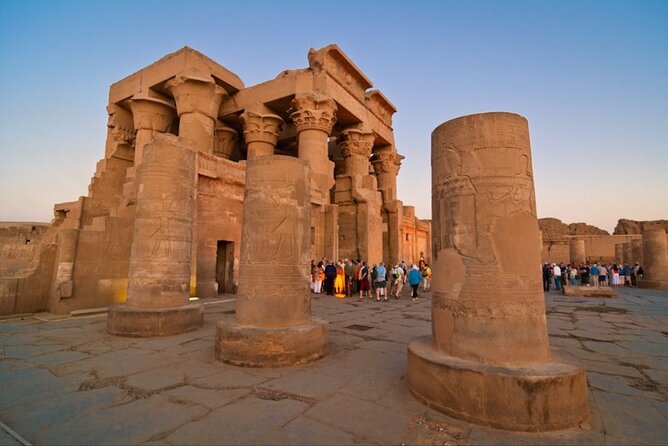
Back on the ship, you continue to Kom Ombo, usually reaching the temple around sunset. The late timing is a good choice. The changing light gives the stone a warmer tone, and the river setting makes the visit feel different from Edfu and Luxor.
Kom Ombo is unusual because it is dedicated to two gods, Sobek and Horus the Elder. Its displays also connect with ancient medicine and temple practice. A three-hour block sounds long, but it includes walking from the ship, touring the site, and returning before sailing again.
After Kom Ombo, the ship continues toward Aswan for the night. This is a day with a pleasing rhythm: one major temple in the morning, sailing and rest in the middle, then a sunset visit. It is still structured, but less crowded with separate stops than the first two days.
More Abu Simbel and Balloon Tours in Luxor:
- 4 Nights Luxor to Aswan Nile cruise with Abu Simbel&Air Balloon
★ 5.0 · 155 reviews - 4 nights Luxor to Aswan Nile Cruise with Abu Simbel & Air Balloon
★ 4.5 · 102 reviews - 5-Day Luxor and Aswan Nile Cruise with Abu Simbel and Hot Air Balloon
★ 5.0 · 60 reviews - 5-Day Nile Cruise Luxor to Aswan Abu Simbel and Hot-Air Balloon
★ 5.0 · 56 reviews
Day four: the long road to Abu Simbel
The Abu Simbel excursion is the longest day of the trip. You leave early and spend about eight hours on the outing, returning to the cruise around 1 p.m. The exact road timing is not provided, so I would ask for the planned departure time and transport arrangement before the journey.
The payoff is substantial. Abu Simbel Temple Complex contains the enormous rock-cut temples of Ramses II and Queen Nefertari, with monumental statues carved into the mountainside. It is a very different sight from the river temples because the scale is immediately clear from outside.
A guide can add real value here by explaining the temples’ construction, religious purpose, and relocation during the creation of Lake Nasser. The available tour details do not spell out every part of the commentary, but an Egyptologist guide is included.
You return to the ship for lunch and time to rest. This is important. Abu Simbel is not a quick add-on, and the early departure can make the afternoon feel slow. Use the ship’s pool or cabin rather than trying to pack in another major monument.
In the evening, you visit Aswan’s local market for about two hours. This is a chance to see a different side of the city after several days focused on pharaohs and temples. The stop is not described in detail, so expect a guided market visit rather than a special shopping program.
Day five: Philae, the High Dam, and the unfinished obelisk
The final morning begins with a motorboat to Philae Island Temple, dedicated to Isis. The boat ride is part of the pleasure of the stop. Philae’s island setting gives the visit a calmer feel than the huge complexes at Karnak and Abu Simbel.
The temple was moved to protect it from rising water after the Aswan High Dam project. Your guide should connect the modern engineering story with the ancient religious site, since that relationship is one of Philae’s most interesting features. The visit lasts about two hours.
Next is the Aswan High Dam, with about one hour. It is a modern infrastructure stop rather than an ancient monument, and it helps explain how the Nile was brought under greater control for electricity, irrigation, and flood protection. The tour description presents it as a key engineering work that protects Egypt from annual floods.
The final archaeological stop is the Unfinished Obelisk. Here you see the huge stone still in its original quarry position, abandoned because of a crack. It offers a clear look at how ancient stoneworkers began such a massive project and why a flaw could bring the whole effort to a halt.
Afterward, the company transfers you to an Aswan hotel, train station, or airport. The package therefore works well as a southbound Luxor to Aswan segment, but your onward departure needs to fit the final sightseeing schedule. Confirm the transfer time before arranging a tight flight or train connection.
The ship, food, guides, and pace
The cruise ship is described as five-star, air-conditioned, and equipped with a swimming pool. One public account praised the cabin, housekeeping, and towel figures made in the room, while also noting that the boat did not match its promotional video. That gives you a fair picture: comfort may be perfectly acceptable, but do not assume luxury branding guarantees a polished resort standard.
All four breakfasts, lunches, and dinners are included. This makes the price easier to assess, especially during the days when the schedule leaves little time for independent meals. Drinks are separate, and tipping is not included.
The Egyptologist guide is central to the experience. Good guiding matters here because the monuments can blur together when you visit several in quick succession. The public feedback includes strong praise for engaging explanations, but the operator has also acknowledged that shared groups can create problems when different people want different things.
That point deserves attention. The experience is advertised as private, yet the operator has referred to shared group conditions in its response to a complaint. Ask directly: Will only your party join the guide and vehicle? Is the ship shared but the sightseeing private? Who handles the balloon, Abu Simbel, and final transfer?
Communication and booking cautions
The available public feedback is sharply mixed. Several accounts describe the balloon ride, Abu Simbel, temples, food, clean ship, and overall organization in glowing terms. Other accounts accuse the company of unclear business practices, poor communication, and questionable review activity.
I would not ignore that split. Before paying, get a written confirmation showing:
- The exact cruise ship and cabin category
- Whether the sightseeing is private or shared
- The names or contact details of the local operators handling the balloon and Abu Simbel
- What happens if the balloon is canceled
- Whether all listed admission tickets are included
- Whether drinks, transfers, and tips are separate
- The cancellation terms
The stated cancellation rule allows a full refund if you cancel at least 24 hours before the start time. Changes or cancellations within 24 hours are not refunded. The cut-off uses local time, so keep the confirmation message.
Who should book this five-day Nile route?
I would recommend it to someone who wants the major Upper Egypt sights in one organized package and does not want to coordinate several local tours. The combination of a cruise, balloon flight, Abu Simbel, and expert guiding gives you a lot in five days.
It suits an active schedule. You should be comfortable with early starts, long touring days, heat, walking, and a full timetable. It is less suited to anyone seeking a slow luxury cruise with long afternoons ashore or plenty of independent time.
Families and small groups may like the private-tour format if it is confirmed in writing. Solo guests should ask about the shared-group issue, since the operator’s own response suggests that group arrangements can affect how easily individual requests are handled.
FAQ
How long is the Nile cruise?
The experience lasts approximately five days and includes four nights aboard a five-star Nile cruise ship, sailing from Luxor to Aswan.
Is Abu Simbel included?
Yes. The Abu Simbel Temple Complex visit, transport for the trip, and admission are included in the package.
Is the hot air balloon ride included?
Yes. The sunrise balloon ride over Luxor is included and is listed as lasting about 45 minutes. The available information does not explain the replacement policy if weather prevents the flight.
Are meals included?
Yes. The package includes four breakfasts, four lunches, and four dinners. Drinks are not included, and tipping is separate.
Is this a private tour?
The experience is described as a private tour for your group. However, the operator has also referred to shared groups in its public response, so confirm the arrangement before booking.
What is the cancellation policy?
You can receive a full refund if you cancel at least 24 hours before the experience begins. Cancellations or changes made within 24 hours are not refunded.
Should you book it?
Book this tour if you value convenience and want Egypt’s biggest Luxor to Aswan sights handled in one five-day plan. The balloon ride, Abu Simbel, and the cruise make it more than a standard temple transfer.
I would book only after receiving written answers about the ship, group size, guide arrangements, drinks, balloon backup plan, and transport. The sightseeing program is excellent on paper, and the strongest feedback praises the exact moments you hope will define the trip. The operator’s mixed business record means the practical details matter just as much as the ancient monuments.
Just added around Luxor
- Hot Air Balloon Flight in Luxor with Pickup★ 4.5 · 14 reviews
- Hot Air Balloon Ride and Tour to Valley of Kings Luxor- Special Offer★ 5.0 · 15 reviews
- Hot Air Balloon trips in Luxor★ 5.0 · 3 reviews
- Enjoy The hot Air Balloon,Kings Valley,Sailing Felucca,Camel Ride in Luxor★ 5.0 · 6 reviews
- Enjoy The hot Air Balloon,Kings Valley,Sailing Felucca,Camel Ride in Luxor★ 5.0 · 6 reviews
- Luxor Tours: City Tour,Hot Air Balloon,Kings Valley,Sailing Felucca,Camel Ride★ 4.5 · 19 reviews
- Amazing Luxor hot air balloon and tour to valley of the kings.Special offer★ 5.0 · 3 reviews
- Balloon Ride Luxor Egypt★ 5.0 · 68 reviews
Luxor Hot Air Balloon Rides, compared.

Hot Air Balloon Ride in Luxor Egypt with Transfers Included
Read our review →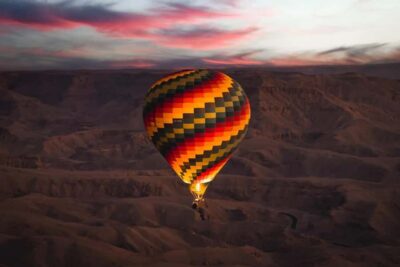
2-Day Luxor Tour with Hotel, Balloon, & Boat Ride
Read our review →
Luxury Sunrise Balloon Ride in Luxor with Hotel Pickup
Read our review →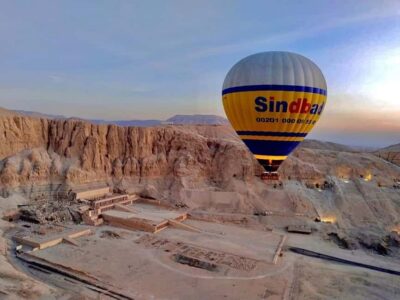
Sunrise Hot Air Balloon Over the Historical sites in Luxor
Read our review →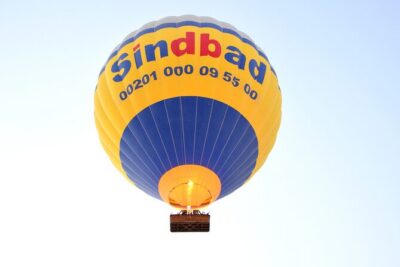

Sunrise Ballooning Luxor with Transfers Included
Read our review →Browse the lists this tour appears in