
REVIEW · LUXOR
3-Nights Cruise Luxor to Aswan including Abu Simbel & Balloon ,Tours from Luxor
Egypt rewards early mornings. This four-day Nile cruise links some of the country’s greatest sights, from the Valley of the Kings to Abu Simbel, with a hot-air balloon ride over Luxor and three nights aboard a five-star boat. I especially like the excellent range of temples and the fact that meals, transfers, guiding, and the balloon flight are included. The main catch is that entrance fees, drinks, and tips are extra, so the advertised price is not the final cost.
I also like the practical route. You travel downstream from Luxor to Aswan, with Edfu and Kom Ombo appearing along the way instead of requiring separate road trips. The M/S Nile Dolphin received especially warm praise for its clean cabins, attractive decor, kind crew, and strong onboard service, though the schedule is packed and the Abu Simbel day begins around 5 a.m.
Key points at a glance
- Hot-air balloon over Luxor: An early flight gives you an unusual view of the Nile and the ancient monuments on the west bank.
- Three nights on a five-star cruise: Full board covers breakfast, lunch, and dinner during the cruise, with cabins equipped with standard facilities.
- A strong temple lineup: The route includes Karnak, Luxor Temple, Edfu, Kom Ombo, Philae, and the Aswan High Dam.
- Abu Simbel included: The long day to Ramses II’s great temples is one of the trip’s biggest rewards, although it requires an early start.
- Small-group Abu Simbel visit: The Abu Simbel portion includes an English-speaking guide and a shared small group.
- Useful extras: Transfers, an Egyptologist guide, horse and carriage transport at Edfu, a motorboat, local taxes, and up to 4GB of Wi-Fi are included.
What the $599 price really covers
At $599 per person, this trip offers a lot for four days. You receive three nights on a five-star cruise, full board from lunch on the first day through breakfast on the final day, an Egyptologist guide, an air-conditioned coach, hotel or accommodation pickup, the balloon flight, and transport by horse and carriage and motorboat.
That matters in Egypt because the major sights are spread out. You are not piecing together separate taxis, day trips, and river transfers. The cruise handles the movement between Luxor and Aswan while your guide explains what you are seeing.
Still, budget carefully. Entrance fees are not included, even though every major stop requires admission. Drinks are also extra, and tipping is excluded. The package includes three breakfasts, three lunches, and three dinners, but meals outside that arrangement are your responsibility.
The value is best for someone who wants a ready-made Nile itinerary rather than a bare boat cabin. If you already have accommodation in Luxor and Aswan, or prefer to arrange each temple yourself, the price may feel less attractive. If you want transport, meals, guiding, and a balloon flight bundled together, it is a practical package.
More Abu Simbel and Balloon Tours in Luxor:
- 4 Nights Luxor to Aswan Nile cruise with Abu Simbel&Air Balloon
★ 5.0 · 155 reviews - 4 nights Luxor to Aswan Nile Cruise with Abu Simbel & Air Balloon
★ 4.5 · 102 reviews - 5-Day Luxor and Aswan Nile Cruise with Abu Simbel and Hot Air Balloon
★ 5.0 · 60 reviews
Day one: royal tombs and Hatshepsut’s great terrace
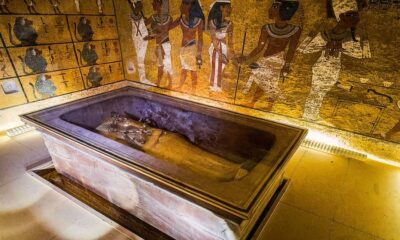
The first day focuses on Luxor’s west bank, beginning at the Valley of the Kings. You have about two hours here, enough to enter selected tombs and get a feel for this dry desert valley, but not enough to inspect every open tomb at leisure.
The valley contains both an East Valley and a West Valley, though the famous royal tombs are associated mainly with the East Valley. Your guide is important here. The painted chambers can look similar at first, and a good explanation helps you notice the religious scenes, burial details, and changes between different reigns.
Since admission is not included, you should confirm which tickets are covered by the entrance fee you purchase. Special tombs can have separate charges, so ask before choosing. Comfortable shoes and water will help, though drinks are not supplied by the tour.
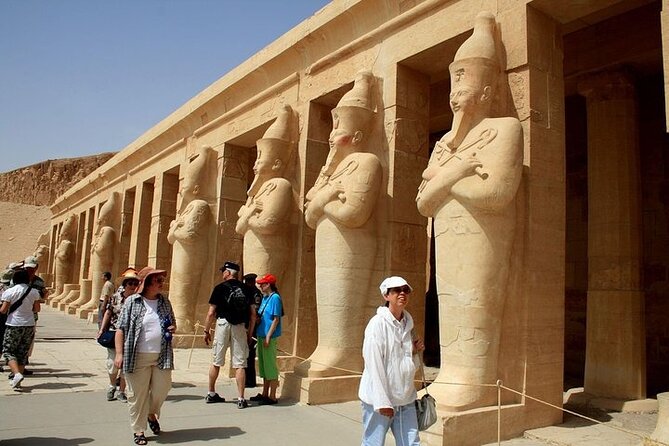
Next comes the Temple of Hatshepsut at Deir el Bahari, with about 90 minutes to explore. Built into the cliffs, the temple has broad terraces and strong horizontal lines that contrast with the surrounding rock. Hatshepsut’s story is one of the most interesting parts of the visit. She ruled as king of Egypt and became one of the most successful rulers of the Eighteenth Dynasty.
The wording used to describe Hatshepsut can be confusing, and ancient titles do not always translate neatly into modern language. Let your guide sort out the details. The key point is that she presented herself as a legitimate ruler and commissioned a temple on a scale suited to that role.
The day ends at the Colossi of Memnon. You have about 30 minutes here, and admission is included. The two seated statues portray Amenhotep III and are the surviving remains of a much larger funerary temple.
This is a short stop, but it works well as a final look at the west bank. The statues face toward the Nile and are an easy place for photographs. Do not expect a full museum visit or a long guided walk. It is a quick monument stop before the cruise schedule takes over.
Day two: flying above Luxor, then meeting the great temples
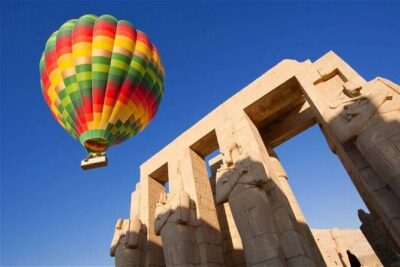
The balloon ride begins early. You are picked up and taken to the marina, where a motorboat carries you to the west bank before the flight. The balloon portion lasts about an hour and is included in the package.
The value here is the view. From the air, you can see how sharply the cultivated Nile valley gives way to the dry ground around Luxor. Ancient sites that feel spread out from street level become part of one larger picture. The flight is also a calm counterpoint to the busy temple visits later in the day.
Because the flight depends on the operating conditions, keep your early morning free and follow the pickup instructions closely. The experience is not a leisurely start. It is an early start followed by more sightseeing, so anyone who needs slow mornings may find this day tiring.
Karnak Temple comes next, with about two hours on site. The complex grew over many centuries, from the Middle Kingdom through the Roman period. It was dedicated to the Theban religious group of Amun, Mut, and Khonsu, though the great precinct of Amun dominates what most people call Karnak.
This is the place where a guide earns his or her fee. The complex is large, and the columns, courts, gateways, and sacred areas can blur together without a clear route. Two hours gives you a useful introduction, but not a scholarly study of every section.
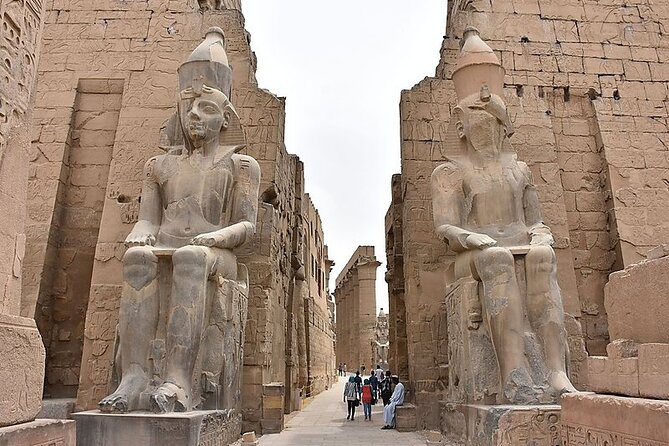
The afternoon or later part of the day brings you to Luxor Temple for about 90 minutes. Unlike Karnak, Luxor Temple feels more compact and direct. It was founded around 1400 BC and expanded under rulers including Amenhotep III and Ramses II.
Look for the long approach, the monumental entrance, the courtyard, and the large columns. The temple was linked to the religious life of ancient Thebes and was used over several dynasties. Your guide can help connect the buildings to the rulers who added them.
The two Luxor temples are close enough in theme to make comparison useful. Karnak feels like a vast religious complex, while Luxor Temple gives you a more focused visit. The drawback is fatigue. A balloon flight, two major temples, and cruise arrangements make day two full from beginning to end.
Day three: Edfu by horse and carriage, then Kom Ombo
Edfu Temple is the morning highlight. The visit includes a traditional horse and carriage ride, which adds a practical touch because it carries you from the cruise area to the temple. The temple itself is dedicated to Horus and took about 180 years to build.
Edfu is especially valuable because much of its structure remains easy to read. You can see the monumental entrance, large courts, and carved walls in a form that makes the ancient plan easier to understand. The temple belongs to the Ptolemaic period and was designed in a style that looked back to earlier Egyptian temples.
The visit lasts about two hours, but the admission fee is extra. The horse and carriage ride is included, as is transport back to the ship. If you are sensitive to animal transport, this is one part of the package to consider in advance. The tour presents it as a standard part of the visit.
After returning to the cruise, the ship continues toward Kom Ombo. The temple is unusual because it served two local gods, Sobek and Horus. Its double design reflects that shared purpose, with paired areas rather than one single religious focus.
Kom Ombo was begun under Ptolemy VI and finished with decoration added during the Roman period, including the time of Emperor Tiberius. That blend of Greek, Egyptian, and Roman work gives the site a different feel from Karnak or Luxor Temple.
Allow about two hours here. The temple has been restored, and the setting beside the Nile gives the visit a memorable visual quality. You may also find the medical and ritual carvings interesting, though the exact focus of your visit will depend on your guide.
Day three is where the cruise itself becomes most useful. Instead of making separate road transfers between Edfu and Kom Ombo, you return to the boat and continue south. You get temple visits without giving up the basic pleasure of moving along the Nile.
A few more balloon flights around Luxor worth a look
- Hot Air Balloon Ride in Luxor Egypt with Transfers Included
★ 5.0 · 4,319 reviews - Luxor: Hot Air Balloon Ride over Luxor Relics
★ 4.8 · 1,681 reviews - Hurghada: 2-Day Luxor Tour with Hotel, Balloon, & Boat Ride
★ 4.5 · 1,113 reviews - Luxury Sunrise Balloon Ride in Luxor with Hotel Pickup
★ 5.0 · 1,104 reviews
Day four: the long road to Abu Simbel
The Abu Simbel visit begins around 5 a.m. This is the hardest day physically, but it also contains the most dramatic single sight on the route. The drive to the temples and back takes much of the day, with about seven hours allocated to the Abu Simbel visit and transport.
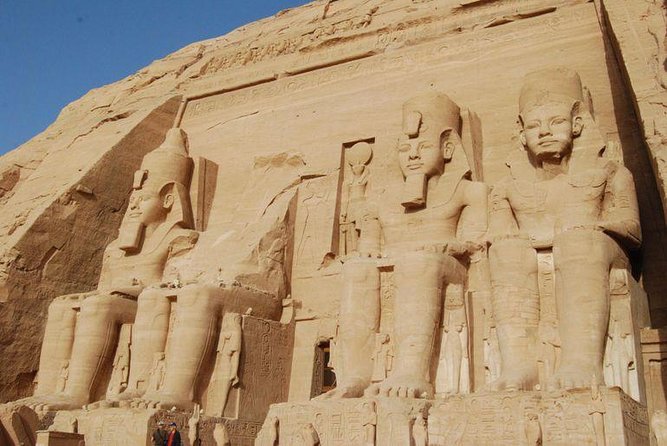
Abu Simbel sits on the western bank of Lake Nasser, roughly 290 kilometers southwest of Aswan. The site is part of the Nubian monuments recognized by UNESCO. Its huge temples were built for Ramses II and Queen Nefertari, and their scale is difficult to grasp from photographs alone.
The early departure is not a minor detail. You should choose this package only if you are comfortable with a long day after several mornings of sightseeing. The Abu Simbel portion uses a shared small group and includes an English-speaking guide, while the wider tour is described as private for your own party. That means you should expect a more limited group arrangement for this particular excursion.
Admission is extra, so set aside money for it. The package includes transport and guiding, but not the entrance ticket. The long journey is the main drawback, yet skipping Abu Simbel would remove one of the strongest reasons to choose this route.
Philae and the Aswan High Dam
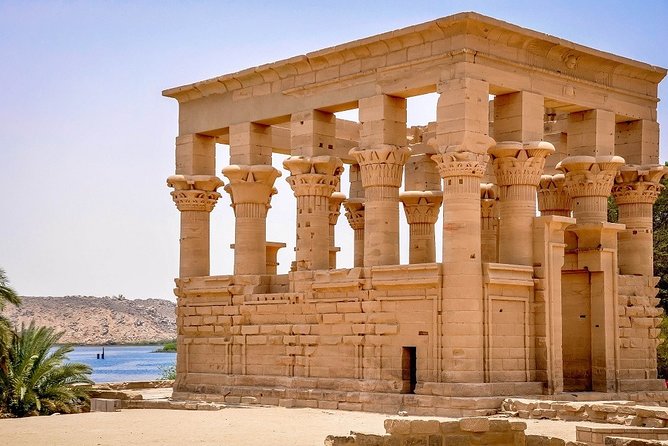
After Abu Simbel, the Aswan sightseeing continues with Philae Temple. You take a motorboat to the island, and the visit lasts about two hours. The temple was dedicated to Isis and remained a sacred place through the Pharaonic, Greek, Roman, and Byzantine periods.
Philae has an unusual modern story as well as an ancient one. UNESCO moved the monuments block by block from the original Philae Island to Agilika Island to protect them from rising water after the construction of the Aswan High Dam. That makes the boat ride part of the meaning of the visit, not simply a way to reach the site.
The motorboat is included, but the entrance fee is not. The island setting gives Philae a slower, more enclosed feel after the very long Abu Simbel outing. Two hours is a sensible amount of time for the main temple area.
The final stop is the Aswan High Dam. The visit lasts about two hours and explains a major modern project in Egypt. Built during Gamal Abdel Nasser’s era with Soviet help, the dam controls the Nile’s flow, reduces the impact of flooding, and produces electricity.
The dam is not an ancient monument, but it helps explain why the Nile looks and functions differently today. Its listed measurements are immense: about 3,600 meters long, 111 meters high, and 40 meters wide at the summit. The stop gives the journey a useful modern counterpoint to the temples.
Life aboard the M/S Nile Dolphin
The strongest practical praise goes to the cruise boat and its crew. The M/S Nile Dolphin was described as having beautiful decor, very clean cabins, and service from a kind, helpful staff. That is important on a short cruise because you spend three nights aboard, and a tired or cramped cabin would affect the entire trip.
The package promises cabins with all facilities and up to 4GB of free Wi-Fi. Internet access is limited, so use it for essential messages rather than expecting constant service. Drinks are not included, and that includes the small purchases that can quietly raise the total.
Meals begin with lunch and end with breakfast. Three breakfasts, three lunches, and three dinners are included. The food was praised as delicious, but no detailed menu is provided, so I would treat the meal plan as convenient full board rather than a reason to book on its own.
Evening activities are part of the appeal. The overview describes a lively cruise with plenty happening after the day’s sightseeing. Exact activities are not specified, so do not book expecting a particular show or performance. Think of the boat as a social base after long days on shore.
Who should book this Nile cruise?
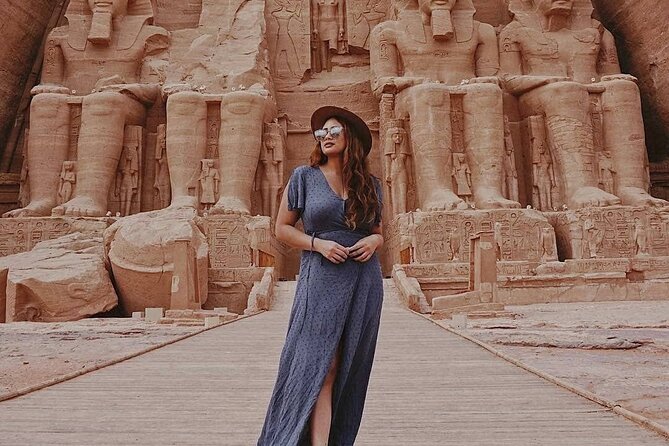
I would recommend it to a first-time Egypt visitor who wants the major Luxor to Aswan sights handled in one package. It suits people who value a guide, included transfers, full-board meals, and the convenience of sleeping on the river instead of changing hotels.
It is also a good match for anyone determined to see Abu Simbel and take a balloon flight. Those two additions make the trip more distinctive than a basic Nile cruise.
I would be more cautious if you dislike early mornings, long coach rides, or tightly scheduled sightseeing. The balloon starts early, the west-bank visits are full, and Abu Simbel requires a very early departure. Entrance fees are also a real extra cost, so compare the final budget rather than relying only on the $599 headline price.
Most travelers can participate, and pickup is offered. Group discounts are available, confirmation is received at booking, and free cancellation is allowed up to 24 hours before the start time. If you cancel later, the amount paid is not refunded.
Final verdict: a strong route with a demanding schedule
This is a well-packed way to see the Nile corridor. I like the balance of famous ancient sites, a balloon flight, a working river journey, and the modern story of the Aswan High Dam. The clean, well-regarded M/S Nile Dolphin and helpful crew add real value to the three nights aboard.
The decision comes down to pace. If you want a broad first look at Luxor, Edfu, Kom Ombo, Philae, Aswan, and Abu Simbel, the schedule earns its keep. If you want long, quiet visits at each temple, book a longer itinerary instead.
For a four-day introduction with full-board cruising, guiding, transfers, and Abu Simbel included, I would consider this a good-value choice. Just budget for entrance fees, drinks, tips, and the energy required for those early starts.
FAQ
How long is the cruise experience?
The experience lasts about four days and includes three nights aboard a five-star cruise.
What is the price per person?
The listed price is $599 per person.
Is pickup available?
Yes. Pickup is offered, and the experience includes transfers by air-conditioned coach.
Is the tour private?
The activity is described as private for your group, but the Abu Simbel visit uses a shared small group with an English-speaking guide.
Are entrance fees included?
No. Entrance fees for the listed sites are not included and must be paid separately.
Are meals included?
Yes. Meals include three breakfasts, three lunches, and three dinners. Service begins with lunch and ends with breakfast.
Is the hot-air balloon ride included?
Yes. The Luxor hot-air balloon flight is included, along with transport by motorboat to the west bank.
Is Abu Simbel included?
Yes. Abu Simbel is included in the program, but its entrance fee is not included.
Is Wi-Fi available on the cruise?
Yes. Up to 4GB of Wi-Fi is included.
Can I cancel for a full refund?
Yes, if you cancel at least 24 hours before the experience start time. Cancellations made less than 24 hours before the start time are not refunded.
Just added around Luxor
- Hot Air Balloon Flight in Luxor with Pickup★ 4.5 · 14 reviews
- Enjoy The hot Air Balloon,Kings Valley,Sailing Felucca,Camel Ride in Luxor★ 5.0 · 6 reviews
- Hot Air Balloon Ride and Tour to Valley of Kings Luxor- Special Offer★ 5.0 · 15 reviews
- Hot Air Balloon trips in Luxor★ 5.0 · 3 reviews
- Enjoy The hot Air Balloon,Kings Valley,Sailing Felucca,Camel Ride in Luxor★ 5.0 · 6 reviews
- Luxor Tours: City Tour,Hot Air Balloon,Kings Valley,Sailing Felucca,Camel Ride★ 4.5 · 19 reviews
- Amazing Luxor hot air balloon and tour to valley of the kings.Special offer★ 5.0 · 3 reviews
- Balloon Ride Luxor Egypt★ 5.0 · 68 reviews
Luxor Hot Air Balloon Rides, compared.

Hot Air Balloon Ride in Luxor Egypt with Transfers Included
Read our review →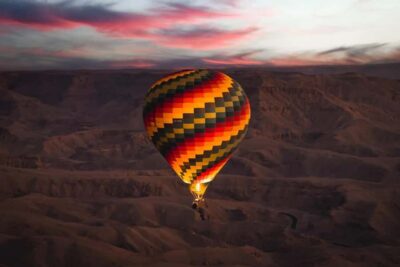
2-Day Luxor Tour with Hotel, Balloon, & Boat Ride
Read our review →
Luxury Sunrise Balloon Ride in Luxor with Hotel Pickup
Read our review →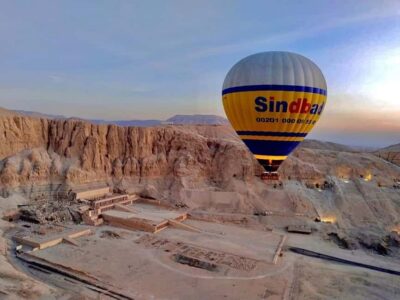
Sunrise Hot Air Balloon Over the Historical sites in Luxor
Read our review →

Sunrise Ballooning Luxor with Transfers Included
Read our review →Browse the lists this tour appears in