
REVIEW · LUXOR
From Luxor:8-Night Luxury Nile River Cruise & Hot Air Balloon
Ancient Egypt rewards an early start. This nine-day journey combines a five-star Nile cruise with Luxor’s tombs, Aswan’s islands, Abu Simbel, and a hot-air balloon flight over the river valley. I like the generous coverage, especially the inclusion of Tutankhamun’s tomb, Dendera, Abydos, and Abu Simbel. I also like that meals, private transport, entrance fees, and guides are bundled into the $1,357 price.
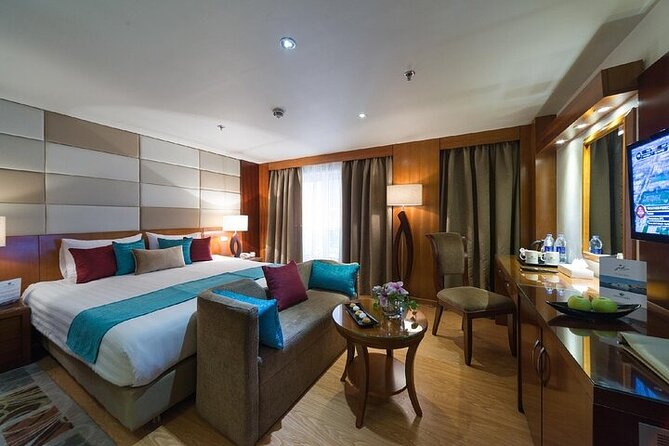
The main caution is that the schedule is full, and the ship experience may not match every traveler’s idea of luxury. One critical account described unreliable onboard Wi-Fi and poor support from staff, while other accounts praised smooth coordination and excellent guides. I would confirm the exact ship, cabin standard, internet arrangements, and hotel details before paying.
Key points to know before booking
- A rare hot-air balloon start: You rise before sunrise in Luxor for views over the city, Nile, villages, and ancient sites.
- Abu Simbel is included: The long eight-hour visit covers one of Egypt’s most remarkable temple complexes without needing a separate booking.
- The cruise covers the classic route: Luxor, Esna, Edfu, Kom Ombo, Aswan, and a return to Luxor all fit into eight nights aboard ship.
- Abydos and Dendera add real depth: These northern temple visits go beyond the usual cruise itinerary and require long road transfers.
- Guides are a major strength: George, Gabriel, Asma Saber, Ahmed Bahaa, Adam, David, and Zainab are praised for clear explanations, care, and organization.
- The pace is demanding: Several sightseeing days begin early, and the Abu Simbel, Nubian village, Abydos, and Dendera outings require stamina.
What the $1,357 price really covers
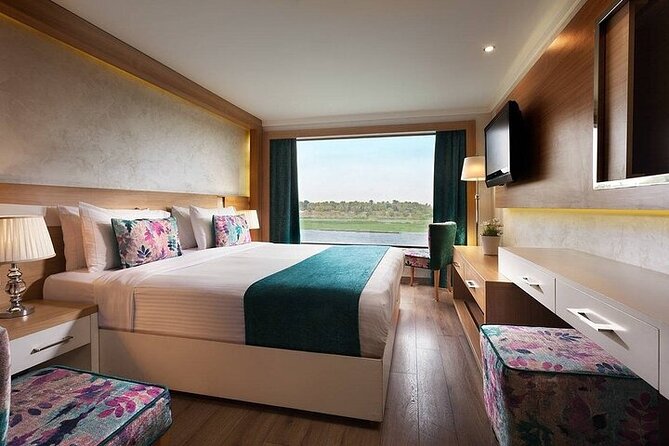
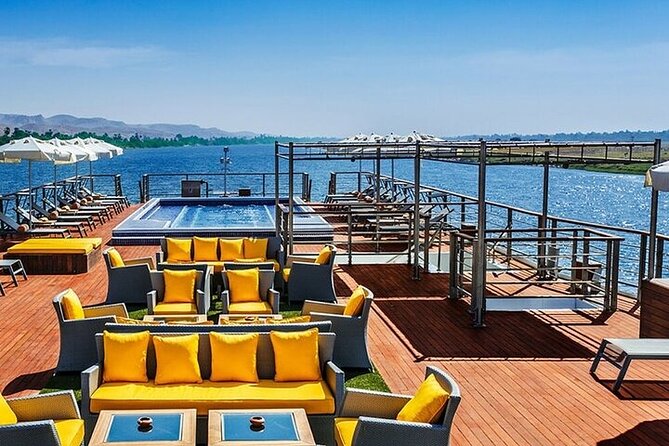
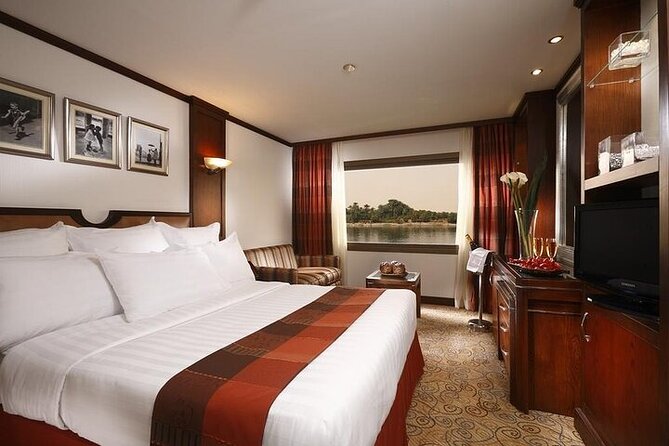
At $1,357 per person, this is not a simple cruise with a few optional tours. The price includes eight nights on a standard five-star Nile ship, all listed meals, entrance fees, private transportation, an Egyptologist guide, a hot-air balloon ride, a horse-and-carriage transfer at Edfu, a motorboat to Philae, and airport or hotel transfers.
That bundle gives the trip good value if you intend to see Egypt’s major monuments in one organized sweep. Abu Simbel alone requires a substantial journey from Aswan, while the balloon flight, Philae boat ride, and road trips to Abydos and Dendera add costs that can mount quickly when arranged separately.
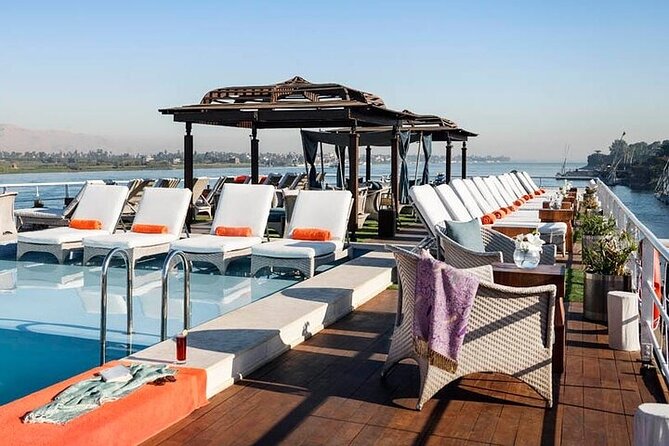
The value is less clear if you dislike fixed schedules or expect a polished international five-star hotel standard. The description says standard Nile cruise ship, which is useful wording. It suggests a comfortable sightseeing base, not necessarily a ship with modern luxury facilities. One serious complaint concerned paid Wi-Fi that did not work during the cruise. Internet access matters if you need reliable communication, so ask about it before departure.
The package includes breakfast, lunch, and dinner for all eight nights. That makes budgeting easier, though the food is described in one account as Arabic-style, and alcohol is not available in the hotels mentioned there. If you prefer a wide choice of restaurants or drinks with meals, this format may feel restrictive.
More Luxury Balloon Flights in Egypt
- Luxury Sunrise Balloon Ride in Luxor with Hotel Pickup
★ 5.0 · 1,104 reviews - Luxury Hot Air Balloon Riding in Luxor
★ 4.5 · 616 reviews - Luxor: Deluxe Sunrise Hot Air Balloon
★ 4.6 · 283 reviews
Day 1: Valley of the Kings and Luxor’s West Bank
The trip opens on Luxor’s West Bank, where the Valley of the Kings gives you an immediate encounter with royal Egypt. The program includes tombs associated with Ramesses III, Ramesses VI, and Merenptah, along with entrance to the tomb of Tutankhamun.
The Valley is not a single monument but a dry royal burial zone filled with painted corridors and chambers. Your guide matters here. Without explanation, the wall scenes can look like a series of beautiful symbols. With context, you can follow the journey of a pharaoh into the afterlife and understand why tomb decoration repeats certain gods, creatures, and rituals.
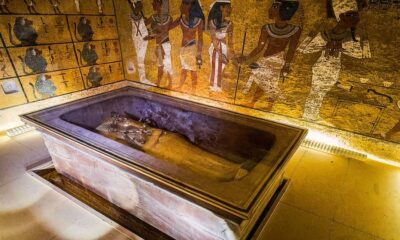
Tutankhamun’s tomb is small compared with the grander royal tombs, but the name carries enormous weight. The inclusion is a useful extra, particularly for first-time visitors. Expect to spend about an hour in the valley, so you will need to follow the guide’s priorities rather than inspect every open tomb at leisure.
Next comes the Temple of Hatshepsut at Deir el-Bahari. Its broad terraces rise against the cliffs, and the design feels very different from the underground tombs. Hatshepsut ruled Egypt for about 20 years, and the visit gives your guide a chance to explain how a woman presented herself as pharaoh in a political world built around male kingship.
The final West Bank stop is the Colossi of Memnon, two huge seated figures linked to the mortuary temple of Amenhotep III. The visit lasts around 30 minutes, which is enough for photographs and a short explanation. It is a brief stop, but it breaks up the morning before you return to Luxor.
Later, you have about an hour in Luxor’s old market. This is one of the few places in the itinerary where you can observe ordinary commerce rather than monumental Egypt. Keep your expectations practical: it is a short orientation visit, not an extended shopping afternoon.
Day 2: A balloon flight before the Nile begins
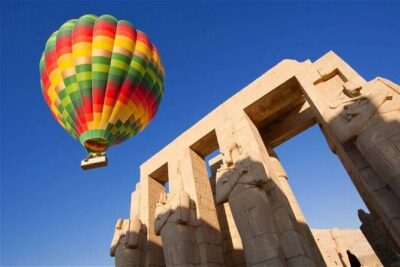
The hot-air balloon flight is one of the trip’s most memorable features, but it demands an early morning. You rise before sunrise, take in the city from above, and watch the light spread across the Nile and surrounding villages.
The flight itself lasts as part of a roughly three-hour morning experience. The important appeal is the changing view. From ground level, Luxor’s temples and tombs are enclosed spaces or enormous stone walls. From the air, you see how the ancient sites relate to farmland, homes, roads, and the river.
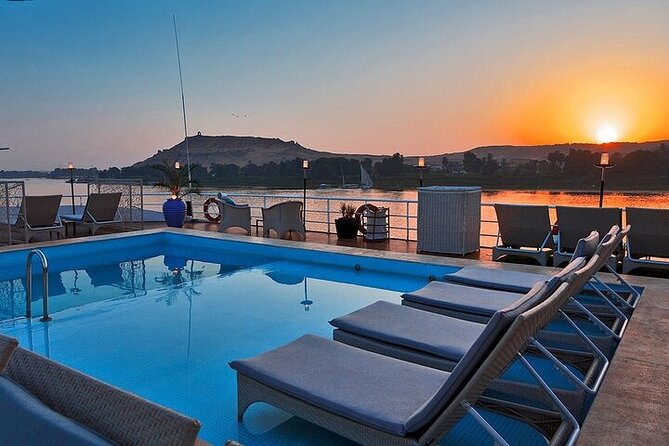
After returning to the ship, the day changes pace. The boat sails through villages and islands before reaching Esna in the evening. This is valuable quiet time. You can sit on the sun deck, watch daily life along the river, and let the scenery come to you instead of moving from one temple to another.
The balloon flight is weather dependent in practical terms, although no specific weather policy is provided. If the flight is important to you, ask how the operator handles a cancellation or delay.
Day 3: Edfu and Kom Ombo by horse carriage and river
Edfu Temple is reached by a traditional horse-and-carriage ride. The temple is dedicated to Horus and is the largest Ptolemaic temple in Egypt. Its scale and preserved reliefs make it one of the clearest places to see how later Egyptian rulers copied the forms of earlier pharaohs.
The carriage ride is part of the experience, but it also means you should be prepared for a less controlled transfer than a private car. The scheduled temple visit lasts about an hour, so listen closely to the guide and save time for the main gateways, reliefs, and sacred spaces.
In the afternoon, the ship continues toward Kom Ombo. The sailing itself is part of the appeal, especially if you take a drink to the sun deck and watch the river pass by. Kom Ombo is unusual because its temple is dedicated to two gods, with the design divided into paired sections.
The contrast between the two sides is the point of the visit. Your guide can help you see how the temple’s layout reflects its dual dedication rather than treating it as another pile of ancient stone. The stop lasts about an hour, leaving you time to return to the ship before departure.
More Luxury Balloon Flights in Luxor
- Sunrise VIP Hot Air Balloon Ride in Luxor
★ 4.5 · 237 reviews - Luxury Balloon Ride in Luxor with Hotels Pickup
★ 4.5 · 142 reviews - Luxury Hot Air Balloon Flight Over Luxor
★ 5.0 · 100 reviews - Luxury Hot Air Balloon Ride Luxor, Egypt VIP Service
★ 4.5 · 62 reviews
Day 4: Philae Island and Aswan’s modern story
In Aswan, a motorboat carries you to Philae Island and the Temple of Isis. The two-hour visit lets you see one of Egypt’s most atmospheric settings, where the water around the island forms part of the experience.
Philae is also a reminder that ancient sites are not always sitting in their original setting. The temple complex was moved because of modern dam construction, a point worth asking your guide about. That modern story gives the visit more weight than a simple stop for photographs.
The Aswan High Dam follows. The dam provides electricity to local residents, and the one-hour visit connects ancient Egypt with the country’s modern infrastructure. Some visitors may find the stop less visually thrilling than Philae, but it explains why the Nile looks and functions as it does today.
You then have free time to explore Aswan and its old market. The itinerary does not specify the length of this free period, so do not assume you will have a full afternoon. Treat it as a chance to browse, buy small items, or sit with a drink before returning to the ship.
Day 5: The long journey to Abu Simbel and Nubian village
Abu Simbel is the largest single excursion on the program, with about eight hours set aside for the temple complex. That long allocation matters because the site is far from the main cruise route and deserves more than a rushed photograph.
The temples were built for Ramesses II and his queen, Nefertari. The monumental façades are the headline, but the interior reliefs and the sense of scale make the visit worthwhile. Your guide can also explain the modern relocation of the temples, a major engineering effort connected with the creation of Lake Nasser.
This will be a tiring day. You are giving up much of the day to reach and explore Abu Simbel, but omitting it would leave a major gap in an Egypt itinerary. Wear practical clothing, carry water, and protect yourself from the sun. The supplied information does not specify the exact transport method or departure time, so ask for those details.
After lunch back on the ship, you visit a Nubian village for about two hours. This changes the tone of the day. Instead of another royal temple, you see a living community connected to the Nile and Nubian culture. The stop is intended as a cultural visit, so approach it with curiosity and respect rather than treating it as a staged ancient site.
Day 6: A useful day to slow down
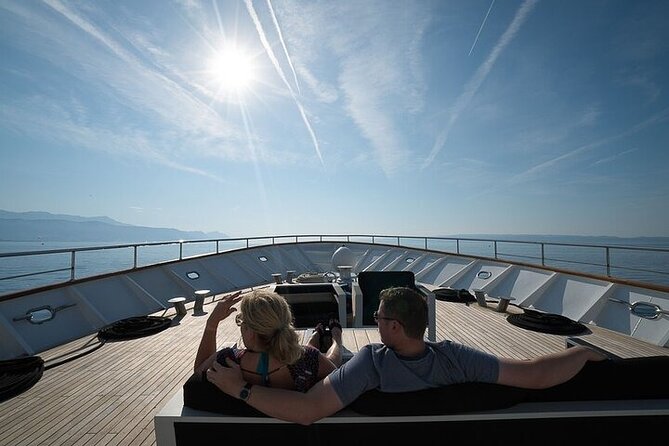
Day six is free on board. After several early starts and long sightseeing blocks, this is not wasted time. I would use it to rest, read, sit on the sun deck, and watch the river.
The free day also helps balance the demanding schedule. If you try to attend every onboard activity or spend the whole day standing in the heat, you may arrive at the final excursions worn out. The program does not list specific ship entertainment or facilities, so keep your expectations focused on rest and river views.
Day 7: Abydos and Dendera by road
This day begins at 7 a.m. with a pickup from your Luxor hotel and a drive north through villages. The wording creates a practical question because the trip also uses a cruise ship and later returns you to a hotel. Confirm where you will sleep on this night and exactly where the transfer begins.
Abydos Temple is dedicated to Osiris and is known for its limestone construction arranged over three stages. The two-hour visit gives your Egyptologist time to explain the site’s religious importance and its unusual plan.
Abydos is particularly worthwhile for people who want more than the standard Luxor and Aswan circuit. The road journey is long, but the reward is a quieter, more focused temple visit. You see village life along the route, which adds an everyday dimension absent from the major tourist sites.
Dendera Temple follows, also for about two hours. Dedicated to Hathor, goddess of motherhood, the temple dates from the late Ptolemaic period and sits on ground regarded as sacred. The complex also includes evidence of earlier religious structures linked to the reign of Pepi I.
The two temples make this a strong history day, but the pace is not gentle. You spend substantial time in vehicles and then walk through large stone complexes. If you value lesser-visited archaeological sites, this is one of the program’s best days. If you dislike long road transfers, it may feel like the itinerary’s hardest section.
Day 8: Karnak, Luxor Temple, and a felucca sunset
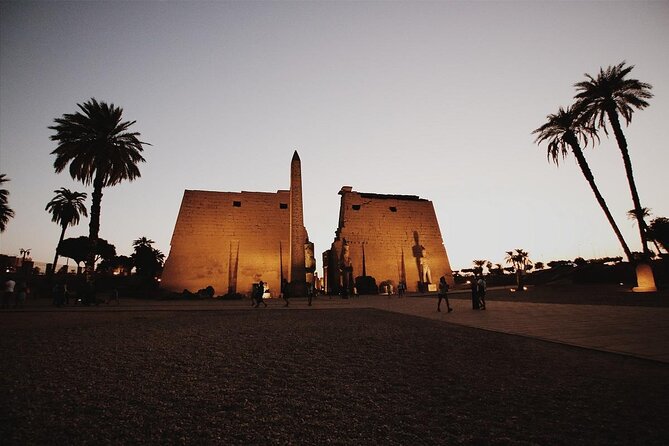
The final sightseeing day returns to Luxor’s East Bank. Karnak receives two hours, which allows a useful introduction to Egypt’s largest temple complex.
Karnak is best understood as a series of sanctuaries, pylons, courts, and columns built and expanded by different rulers. The scale can overwhelm you, so a good guide is essential. Adam is praised for explaining the Valley of the Kings, Hatshepsut, and Karnak, while George is described as bringing ancient Egypt to life through clear, passionate teaching.
Luxor Temple follows for one hour. Built by Amenhotep III and completed by Ramesses, it has a strong connection to royal ceremony and the city’s religious life. Compared with Karnak, it is easier to grasp in a short visit, though one hour still requires efficient guiding.
The day ends with a felucca ride at sunset and free Egyptian tea. You sail past the West Bank as the light fades, which gives the itinerary a calm final scene after so many monuments. The ride lasts about two hours, and it is one of the few scheduled moments built around simply watching the river.
Guides, coordination, and the human side of the trip
The strongest praise centers on the guides and coordinators. George is described as deeply informed and passionate. Asma Saber receives especially warm praise for the West Bank, with clear explanations at Hatshepsut, the Valley of the Kings, and the Colossi of Memnon.
Gabriel is praised for friendly communication and timely arrangements, while David is described as energetic and helpful during a honeymoon trip. Ahmed Bahaa receives repeated approval for clear explanations and personal care, including support for someone uneasy about joining an English-language group. Zainab is praised for sending a daily schedule and handling requests well.
Those details matter because this itinerary has many moving parts. A good Egyptologist does more than recite dates. The guide helps you understand why a temple was built, how a ruler used religion, and what you are looking at when the site becomes visually overwhelming.
The experience is described as private, with only your group participating, but the exact group size is not stated. Ask for clarification if the distinction between private sightseeing and shared cruise arrangements matters to you.
Who should book this Nile cruise?
I would choose this trip if you want Egypt’s major southern sights arranged in one package and you are comfortable with early mornings, long excursions, and a fixed plan. It suits first-time visitors who want a guide at every major site and do not want to arrange separate cars, boats, tickets, hotels, and meals.
I would be more cautious if you need dependable internet, dislike road transfers, or expect a high-end cruise with luxury-hotel service. The cancellation policy allows a full refund when you cancel at least 24 hours before the start time, but changes or cancellations inside that window are not accepted for a refund. Gratuities are optional and not included.
My booking advice is simple: ask for the ship’s name, the exact cabin category, the hotel name for the final nights, the transport plan for Abu Simbel, and the Wi-Fi policy. If those answers are satisfactory, the price covers an impressive amount of Egypt, with unusual additions such as Abydos, Dendera, the balloon flight, and the Nubian village.
FAQ
How long is the experience?
The program lasts approximately nine days and includes eight nights on a standard five-star Nile cruise ship.
What is the price?
The listed price is $1,357 per person.
Is a hot-air balloon ride included?
Yes. The hot-air balloon ride takes place early on day two over Luxor and the surrounding area.
Are meals included?
Yes. Breakfast, lunch, and dinner are included for eight nights. The package lists eight breakfasts, eight lunches, and eight dinners.
Is Abu Simbel included?
Yes. The itinerary includes an approximately eight-hour visit to the Abu Simbel Temple Complex.
Are airport and hotel transfers included?
Yes. Airport and hotel pickup and drop-off are included, along with private transportation.
Is an Egyptologist guide included?
Yes. A professional Egyptologist guide is included. The program is described as a private activity for your group.
Can I cancel for a full refund?
You can cancel for a full refund at least 24 hours before the experience start time. Cancellations or changes made less than 24 hours before the start time are not accepted for a refund.
More Nile Cruise and Balloon Packages in Luxor
- From Luxor: 3-Night Nile Cruise to Aswan and Hot Air Balloon
★ 3.7 · 297 reviews - From Luxor: 5-Day Nile Cruise to Aswan with Balloon Ride
★ 4.2 · 168 reviews - Private Tour to Luxor West and East Banks with Hot Air Balloon,Felucca and lunch
★ 5.0 · 162 reviews - 4 Nights Luxor to Aswan Nile cruise with Abu Simbel&Air Balloon
★ 5.0 · 155 reviews
Just added around Luxor
- Hot Air Balloon Flight in Luxor with Pickup★ 4.5 · 14 reviews
- Enjoy The hot Air Balloon,Kings Valley,Sailing Felucca,Camel Ride in Luxor★ 5.0 · 6 reviews
- Hot Air Balloon Ride and Tour to Valley of Kings Luxor- Special Offer★ 5.0 · 15 reviews
- Hot Air Balloon trips in Luxor★ 5.0 · 3 reviews
- Enjoy The hot Air Balloon,Kings Valley,Sailing Felucca,Camel Ride in Luxor★ 5.0 · 6 reviews
- Luxor Tours: City Tour,Hot Air Balloon,Kings Valley,Sailing Felucca,Camel Ride★ 4.5 · 19 reviews
- Amazing Luxor hot air balloon and tour to valley of the kings.Special offer★ 5.0 · 3 reviews
- Balloon Ride Luxor Egypt★ 5.0 · 68 reviews
Luxor Hot Air Balloon Rides, compared.
Hot Air Balloon Ride in Luxor Egypt with Transfers Included
Read our review →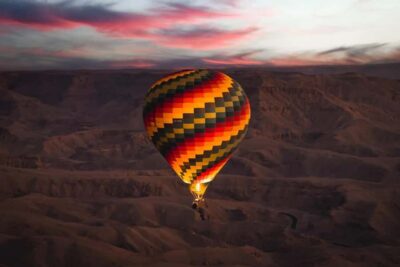
2-Day Luxor Tour with Hotel, Balloon, & Boat Ride
Read our review →
Luxury Sunrise Balloon Ride in Luxor with Hotel Pickup
Read our review →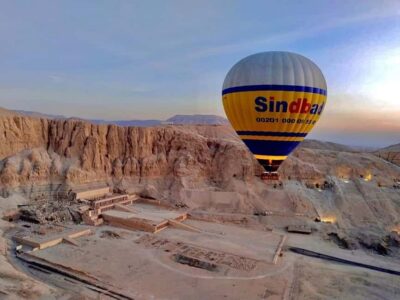
Sunrise Hot Air Balloon Over the Historical sites in Luxor
Read our review →

Sunrise Ballooning Luxor with Transfers Included
Read our review →Browse the lists this tour appears in