
REVIEW · LUXOR
Hot Air balloon w-guided tour toValley of the Kings king tut tom
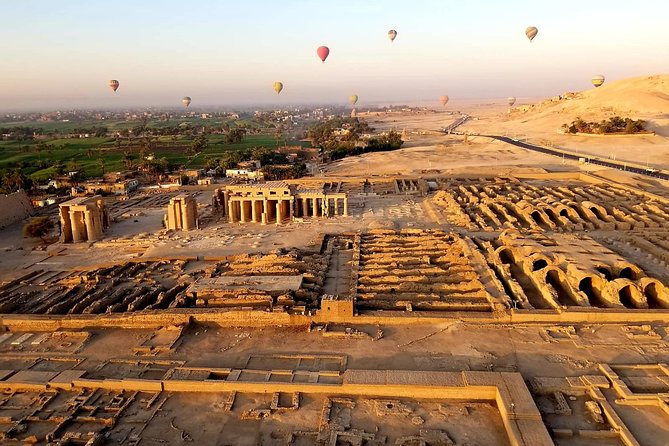
Sunrise makes Luxor unforgettable. This experience pairs a hot-air balloon flight over the West Bank with a guided visit to the Valley of the Kings, including King Tutankhamun’s tomb, the tombs of Ramesses III, Merneptah, and Ramesses IV, plus the Colossi of Memnon. I like the early start because it puts you above Luxor while the light is still soft, and I like having hotel pickup, transport, and a private guided visit arranged in one package.
The main point to check before booking is the exact program. The description mentions Karnak Temple and East Bank sights, while the detailed schedule focuses on the balloon ride and West Bank monuments. The information also conflicts on entrance fees, so confirm what is included before paying.
Key points at a glance
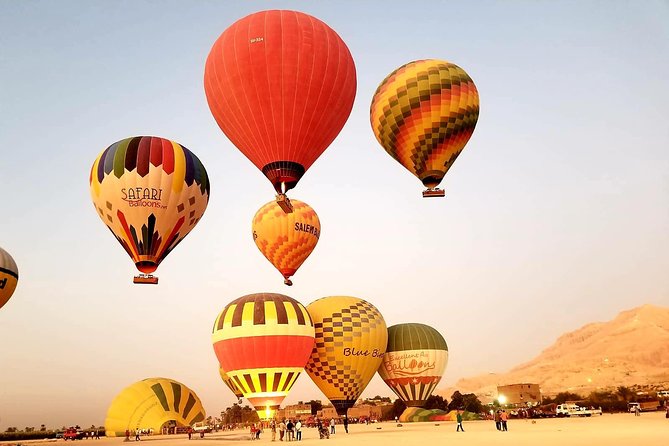
- A 50-minute balloon flight at sunrise: See the West Bank and ancient Thebes from above before the heat builds.
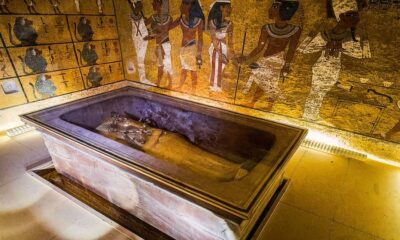
- King Tut’s actual burial place: View Tutankhamun’s royal mummy inside his tomb, not just a museum display.
- Four important royal tombs: The program includes the tombs of Tutankhamun, Ramesses III, Merneptah, and Ramesses IV.
- A guide makes the difference: An Egyptologist can explain the paintings, royal succession, burial customs, and changing tomb design.
- Early pickup is part of the deal: Hotel collection begins around 5:30 a.m., so set an alarm and prepare the night before.
- A flexible private format: Previous bookings praise guides and drivers for adjusting the order and pace when needed.
Why this Luxor morning works so well
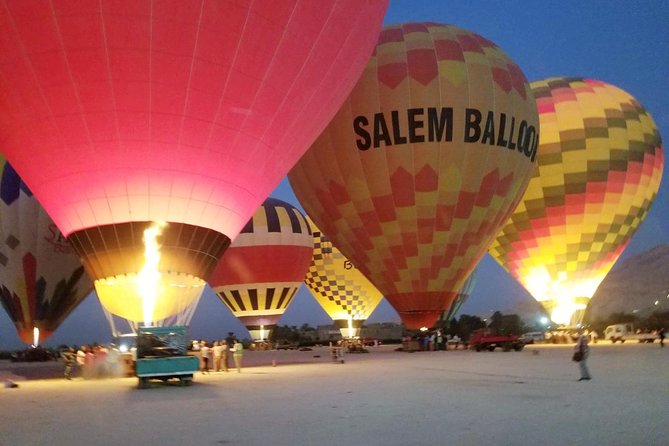
Luxor rewards an early start. The Valley of the Kings sits on the West Bank, where the morning light can make the desert hills and ancient burial area easier to appreciate. The balloon flight adds a viewpoint you cannot get from ground level, then the tour brings you into the tombs themselves.
I like the contrast. From the basket, you look across the West Bank and see the setting of ancient Thebes from a broad angle. Inside the tombs, the experience becomes close and detailed: painted walls, carved religious texts, burial chambers, and the remains of pharaohs.
The timing also helps with the heat. You are collected at about 5:30 a.m., before sunrise, and the balloon flight takes place early. The exact return time can vary, but the listed duration is about five hours. That makes this a useful morning plan if you have other sightseeing scheduled later.
The experience is described as private, but the additional information gives a maximum group size of 20. That is worth clarifying. It may mean your vehicle and guide are arranged for your party, while the balloon itself operates with other passengers. Ask the operator how the private element applies to your booking.
A few more balloon flights around Luxor worth a look
- Package deal Hot Air Balloon Ride & Full Day Luxor Tour w/Guide Lunch
★ 5.0 · 82 reviews - Guided Hot Air Balloon Tour in Luxor
★ 4.5 · 39 reviews - Guided Hot Air Balloon Tour in Luxor
★ 5.0 · 8 reviews
The balloon flight: 50 minutes above Luxor
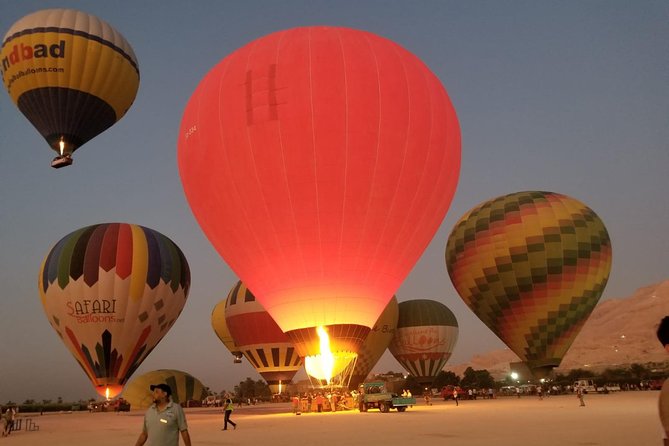
The morning begins with hotel pickup in Luxor and a transfer to the West Bank takeoff site. There, you meet the pilot, receive a safety briefing, and watch the crew prepare the brightly colored balloon.
The flight lasts about 50 minutes. The attraction is not speed or drama. A balloon moves quietly, allowing you to look down over the fields, settlements, river corridor, and ancient monuments without the noise of an engine. The pilot is expected to point out major sights and explain what you are seeing.
The views are the main reason to choose this tour instead of a standard road visit. The West Bank can feel spread out when you move between separate tombs and temples by car. From above, the relationship between the monuments becomes clearer. You can see why the ancient Egyptians placed royal burial sites away from the populated East Bank.
Bring a camera, but keep your attention on the view too. The light changes quickly after sunrise, and the balloon portion is over before you know it. The flight is weather-dependent. If poor weather causes cancellation, you are offered another date or a full refund.
One important cost detail needs checking. The balloon stop says the admission ticket is not included, while the general tour information says entrance fees are included. The same conflict appears throughout the schedule. Get a written answer about balloon costs and site tickets before departure.
Valley of the Kings: four tombs, four different moods
After the flight, the focus shifts to the Valley of the Kings. This is the necropolis of ancient Thebes and one of Luxor’s essential sites. Rather than seeing only one famous tomb, the program allows time for four royal burial places.
The tombs are cut into the desert hills. Their decoration was meant to guide and protect the dead king in the afterlife. Your guide can help you read the scenes as more than attractive wall paintings. Religious texts, gods, symbolic figures, and ritual scenes all form part of the tomb’s purpose.
The Valley can also be tiring. You walk between sites, enter sloping corridors, and spend time underground. The itinerary allocates about two hours to the Valley, with separate visits of about 25 to 30 minutes. That is enough for a focused visit, but not enough for every tomb in the area.
King Tutankhamun’s tomb
Tutankhamun’s tomb is the emotional center of the morning. The young king came to the throne at about age 10 and died at about 19. His burial place was found nearly intact in 1922 by Howard Carter, making it one of the most famous archaeological discoveries ever made.
You do not see the famous golden mask here. That is displayed at the Egyptian Museum in Cairo. You do, however, have the chance to see Tutankhamun’s royal mummy in the tomb itself.
That distinction matters. The tomb is not a grand royal complex on the scale of some others in the Valley. Its fame comes from the extraordinary discovery and from the direct connection to a young ruler whose burial goods changed modern understanding of ancient Egypt.
The scheduled visit lasts about 30 minutes. That is a sensible amount of time for the room, but you should not expect a long, unhurried examination of every detail. Extra fees may apply, since admission information is inconsistent in the tour description.
Same sky, a different way to spend the morning:
- Hot Air Balloon Ride in Luxor Egypt with Transfers Included
★ 5.0 · 4,319 reviews - Luxor: Hot Air Balloon Ride over Luxor Relics
★ 4.8 · 1,681 reviews - Hurghada: 2-Day Luxor Tour with Hotel, Balloon, & Boat Ride
★ 4.5 · 1,113 reviews - Luxury Sunrise Balloon Ride in Luxor with Hotel Pickup
★ 5.0 · 1,104 reviews
The tomb of Ramesses III
Ramesses III’s tomb, known as KV 11, is prized for its colorful decoration. The walls include religious texts such as the Litany of Ra and the Book of Gates, along with scenes of Ramesses before the gods.
The tomb also contains unusual secular scenes in side rooms. These show foreign tribute, pottery from the Aegean, the royal armory, boats, and blind harpists. That last detail gives the tomb one of its alternative names, the Tomb of the Harpers.
I find this tomb especially useful for understanding how Egyptian royal tombs were not decorated with one subject alone. Alongside religious images, you see objects and scenes tied to trade, royal power, music, and administration.
The planned visit is about 25 minutes. Listen closely to the guide here, because some of the most interesting details are easy to miss when you are simply moving through a corridor.
The tomb of Merneptah
Merneptah was a son of Ramesses II and Queen Isis-Nofret. His tomb is designated KV 8 and was discovered by Howard Carter in 1903.
The tomb differs from the others in its design. It has fewer side rooms, while the corridors and chambers rise to greater heights. The layout also moves away from the earlier jogged axis used in royal tomb construction.
Inside, you may notice how the scale and arrangement affect the feeling of the visit. The tomb is not only a container for decoration. Its structure reflects changing choices in royal burial architecture.
The program allows about 25 minutes here. That is enough to see the main spaces and hear the guide explain the changes, but you may want to ask which sections are open on the day of your visit.
The tomb of Ramesses IV
Ramesses IV’s tomb is known for its color and detail. The ceiling above the sarcophagus shows the goddess Nut stretching across the space, a powerful image connected with the king’s journey after death.
The sarcophagus is one of the largest in the Valley. Some paintings have deteriorated, but the tomb remains one of the most decorated in the program.
This is a good stop for visitors who enjoy seeing how decoration continues beyond the walls. Look upward as well as ahead. The ceiling can be the part you remember best.
The scheduled time is about 25 minutes. As with the other tombs, the guide’s explanation helps you understand what you are seeing instead of reducing the visit to a quick walk through painted rooms.
The Colossi of Memnon: a quick but worthwhile stop
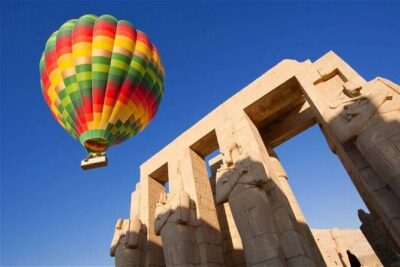
The tour then moves to the Colossi of Memnon. These two giant statues date from the reign of Amenhotep III, who was the father of Akhenaten and grandfather of Tutankhamun.
The statues once marked the entrance to a vast temple complex. Today, the remaining figures are impressive even during a short stop. Their scale gives you a clear sense of the resources ancient Egyptian rulers could command.
The schedule allows about 25 minutes. That is enough for photographs and an explanation of the site, though it is not a full temple visit. Treat this as a final West Bank stop rather than the main event.
The guide and driver can shape the day
A certified Egyptologist guide is included, and that matters in Luxor. The monuments are visually powerful, but the meaning behind them can be hard to grasp without context. A good guide can connect the tomb paintings, royal family lines, burial customs, and architecture.
Several guide names have been associated with this service, including Ragab, Garap, and Mansour Hussain. Driver Ramadan has also been praised for helping the day run smoothly. Specific staff members are not guaranteed, so do not book on the assumption that one named person will lead your tour.
The strongest personal feedback focuses on flexibility. A guide named Ragab and driver Ramadan were noted for matching a family’s relaxed pace and changing the order of stops when people became tired. That is useful in Luxor, where heat, early waking, and underground tombs can wear you down.
Mansour Hussain has also been described as having completed a four-year college program in Egyptology and tour guiding. If he is assigned to your group, you can expect a guide with formal training, but assignments can change.
The vehicle is air-conditioned, and hotel pickup and drop-off in Luxor are included. That removes the need to arrange separate transport across the river, which is a real convenience during a pre-dawn start.
What the $100 price means
At $100 per person, this is not the cheapest way to see the Valley of the Kings. You are paying for a combined experience: early hotel pickup, an air-conditioned vehicle, a balloon flight, an Egyptologist guide, a guided West Bank program, and return transport.
The value is strongest if you want one organized morning covering both an aerial view and several major monuments. Booking separate rides, a balloon flight, and a guide could take more planning and create delays between activities.
The value is less clear if the listed price excludes major admission charges. The tour details say both that all entrance fees are included and that entrance fees are not included. This is not a minor wording issue, especially because King Tutankhamun’s tomb can carry a separate admission charge at Egyptian archaeological sites.
Before booking, ask three direct questions:
- Are the Valley of the Kings entry fee and the individual tomb fees included?
- Is the balloon flight ticket included in the $100 price?
- Does private mean a private vehicle and guide, or only a small group within the stated maximum of 20?
A clear answer can turn a good value into a very good one. An unclear answer is a reason to pause.
Who should choose this experience?
I would recommend it to someone visiting Luxor for the first time who wants the main West Bank highlights arranged in one morning. It suits you especially well if you value a guide’s explanation and want to see King Tutankhamun’s mummy rather than only visit a museum.
It also works for families and mixed-age groups because the schedule can apparently be adjusted when people tire. The air-conditioned vehicle helps between sites, though you still need to manage an early start and walking through the Valley.
You should think twice if you dislike pre-dawn departures, have difficulty walking through sloping tomb corridors, or want a slow visit to each site. The five-hour format is focused. You see a lot, but this is not a leisurely archaeological study.
The tour is also less suitable if Karnak Temple is your main goal. Karnak and the Avenue of Sphinxes appear in the general description, but the detailed schedule supplied for this experience centers on the West Bank. Confirm the exact stops before you book.
Practical advice for a better morning
Set out what you need the night before. Pickup is listed for 5:30 a.m., and the balloon portion takes place before the day warms up. Keep your camera ready, but follow the pilot’s safety instructions and listen for changes caused by weather.
Wear practical clothing and shoes for walking. The tour includes several tombs, and each visit can involve corridors, stairs, or uneven surfaces. The schedule is not designed for lingering at every location.
Use the guide actively. Ask why Tutankhamun’s tomb is smaller than some royal tombs, what the religious scenes mean, and how Ramesses III’s secular images fit into a burial site. Those questions can turn a fast tour into a much more meaningful one.
Keep some flexibility in your expectations. Balloon flights depend on weather, and the order of visits may change. That is not necessarily a problem. A sensible guide may alter the sequence to fit conditions, crowds, or the energy of your group.
Should you book this Luxor balloon and tomb tour?
Book it if you want a memorable, tightly organized morning with two very different views of Luxor: the West Bank from a balloon and the royal tombs from underground. The inclusion of King Tutankhamun’s burial chamber, the four tomb visits, hotel transport, and an Egyptologist guide gives the day real substance.
I would not book until the entrance-fee contradiction is resolved. Also confirm whether Karnak Temple is part of your actual itinerary and how the private format works with the stated maximum of 20 people.
If those details are clear, this is a strong choice for a first Luxor visit. The balloon flight supplies the memorable opening, while the Valley of the Kings provides the historical weight. Just remember that the early alarm is part of the experience, not an optional extra.
FAQ
What time does the tour start?
The listed start time is 5:30 a.m. Hotel pickup in Luxor takes place in the early morning before sunrise.
How long does the experience last?
The overall experience lasts approximately five hours. The balloon flight itself lasts about 50 minutes.
Where does the balloon flight take place?
The balloon takes off from a site on the West Bank of Luxor. The flight provides views of Luxor and the ancient monuments of Thebes.
Which tombs are visited?
The program includes the tomb of King Tutankhamun, the tomb of Ramesses III, the tomb of Merneptah, and the tomb of Ramesses IV.
Can I see King Tutankhamun’s mummy?
Yes. The program includes a visit to Tutankhamun’s tomb, where you can see his royal mummy. His famous golden mask is not there, as it is displayed at the Egyptian Museum in Cairo.
Is Karnak Temple included?
The general description mentions Karnak Temple and East Bank sights, but the detailed schedule lists the balloon flight, Valley of the Kings tombs, and Colossi of Memnon. Confirm the exact stops before booking.
Are entrance fees included?
The information is conflicting. One section says all entrance fees are included, while several itinerary entries say admission is not included. Confirm the fee arrangement with Luxor Travels before payment.
Is hotel transportation provided?
Yes. Hotel pickup and drop-off in Luxor are included, along with transport in an air-conditioned vehicle.
What happens if the balloon flight is canceled because of weather?
The experience requires good weather. If poor weather causes cancellation, you are offered a different date or a full refund.
Just added around Luxor
- Hot Air Balloon Flight in Luxor with Pickup★ 4.5 · 14 reviews
- Enjoy The hot Air Balloon,Kings Valley,Sailing Felucca,Camel Ride in Luxor★ 5.0 · 6 reviews
- Hot Air Balloon Ride and Tour to Valley of Kings Luxor- Special Offer★ 5.0 · 15 reviews
- Hot Air Balloon trips in Luxor★ 5.0 · 3 reviews
- Enjoy The hot Air Balloon,Kings Valley,Sailing Felucca,Camel Ride in Luxor★ 5.0 · 6 reviews
- Luxor Tours: City Tour,Hot Air Balloon,Kings Valley,Sailing Felucca,Camel Ride★ 4.5 · 19 reviews
- Amazing Luxor hot air balloon and tour to valley of the kings.Special offer★ 5.0 · 3 reviews
- Balloon Ride Luxor Egypt★ 5.0 · 68 reviews
Luxor Hot Air Balloon Rides, compared.

Hot Air Balloon Ride in Luxor Egypt with Transfers Included
Read our review →
2-Day Luxor Tour with Hotel, Balloon, & Boat Ride
Read our review →
Luxury Sunrise Balloon Ride in Luxor with Hotel Pickup
Read our review →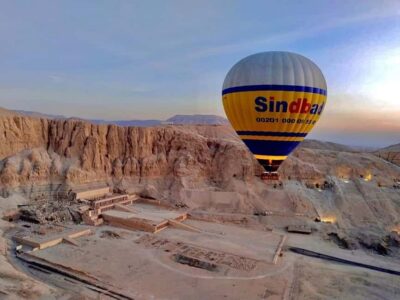
Sunrise Hot Air Balloon Over the Historical sites in Luxor
Read our review →

Sunrise Ballooning Luxor with Transfers Included
Read our review →Browse the lists this tour appears in